

Google AI Overviews: What It Means for Your Business and How to Get Cited
Google answers the customer above the organic results. What that does to your traffic, why clicks fall even when rankings hold, and what actually gets a business into the answer.

TL;DR: AI Overviews is a written answer Google places above the organic results. For a business it means you can hold your ranking and still lose clicks, because the visitor got the answer without scrolling. What gets a business into the answer is not a trick but three things together: an entity Google is confident about, content someone can quote a whole sentence from, and outside sources that corroborate it.
Plenty of site owners in Israel are seeing a confusing pattern in Search Console: impressions hold or even rise, average position has not slipped, and clicks are down. In many cases this is not a drop in rankings but a change in the shape of the results page. This article explains what is happening and what can actually be done.
What AI Overviews is and where it sits
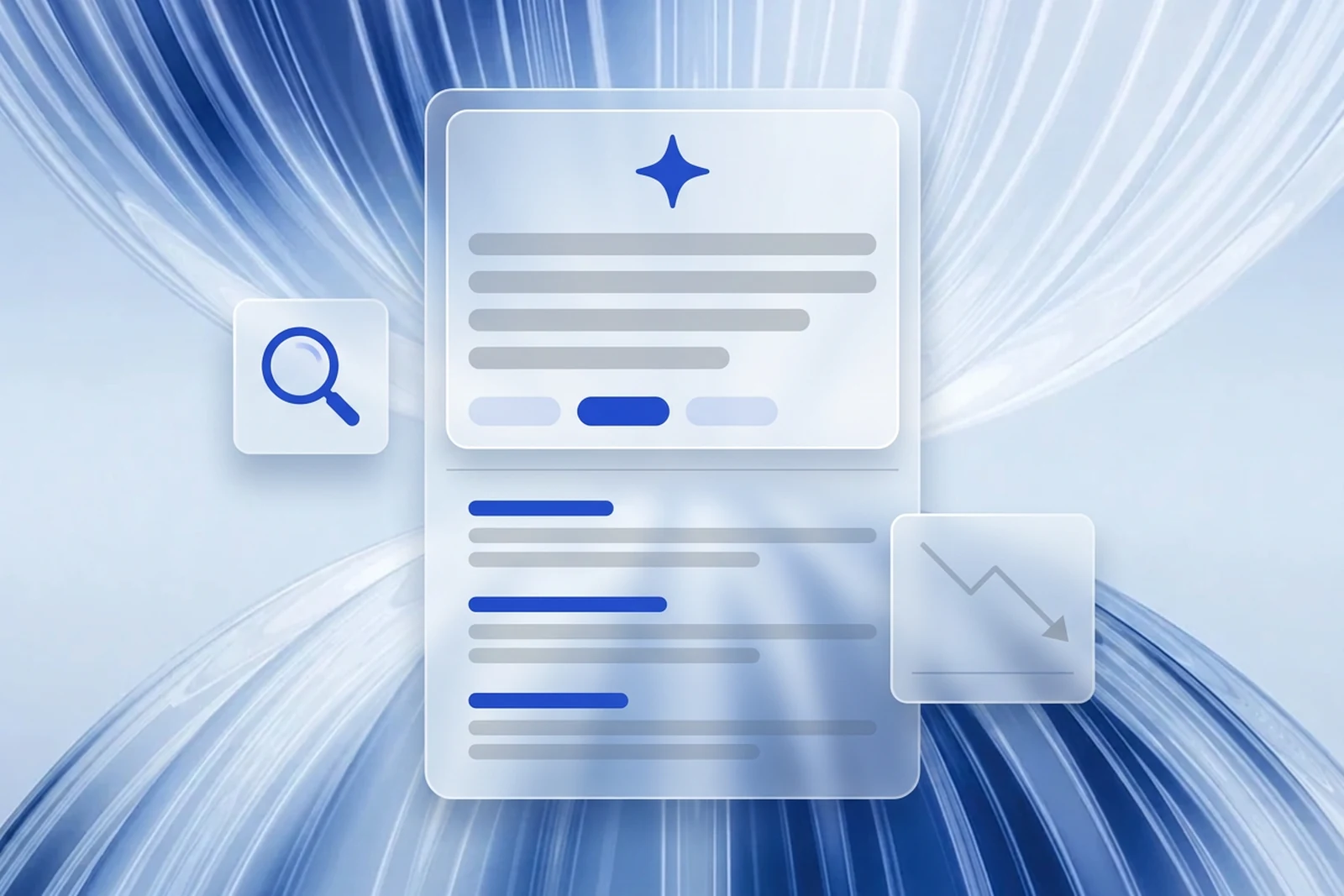
AI Overviews is a summary Google generates at the top of the results page, with links to the sources it drew on. The visitor gets a direct answer, and only below it come the familiar blue results. For a business this is not another box on the page but a change in reading order: what used to be "choose among ten results" has become "read the answer, and continue only if it was not enough".
The practical consequence: informational queries lose clicks faster than queries with buying intent. Someone looking for a definition gets it in the answer; someone looking for a supplier still has to click.
Why the Search Console numbers mislead
It matters how Google counts: an appearance inside AI Overviews is counted as an impression. So a page can appear more often, lose clicks, and look in the report as though its CTR collapsed for no reason.
| What the report shows | What it may mean |
|---|---|
| Impressions up, clicks down | The answer was given on the page; no reason to enter |
| Position improves, clicks fall | The page rose but was pushed below the answer |
| Informational queries fall, commercial hold | The typical signature of the shift to AI answers |
The practical conclusion: position on its own is no longer a sufficient measure. Look at clicks and enquiries by query type rather than at an average that hides the picture.
What actually gets a business into the answer
An entity Google is confident about. An engine composing an answer avoids a source whose identity it is unsure of. One consistent business name, the same address and phone everywhere, a verified business profile, and links between your assets - that is the base. A business whose details appear in three different forms online is giving the engine a reason to pick somebody else.
Content you can quote a sentence from. A direct answer in the opening paragraph, figures with a source, and a table that settles a comparison. A general marketing paragraph cannot be quoted, so it is simply not chosen. Ask yourself: if I had to copy one sentence from this page as the answer, which sentence would it be? If there is not one, there is nothing to cite.
Structured data in order. Organization, LocalBusiness, FAQPage and Breadcrumb joined into one graph with stable identifiers. That is what lets an engine work out who is saying what, rather than only reading text.
Corroboration from outside. An engine leans on what others say about you at least as much as on what you say about yourself: a Google Business Profile, local directories and mentions elsewhere.
What not to do
Do not delete informational content on the grounds that "it gets no clicks anyway". That content is usually what earns the authority behind being cited at all, and what brings a visitor to the brand early. The right move is the opposite: make sure informational pages lead clearly to the relevant commercial page, so the visits that do happen are worth something.
And do not block the AI crawlers and then wonder why you are absent from the answers.
The bottom line
AI Overviews did not abolish organic search; it changed what you measure. The base is the same base - a fast site, a clear structure, real content - with a layer of clarity added on top: who you are, what you claim, and who confirms it. We cover that layer on our AI search visibility page and in our article on GEO and generative engine optimisation.