

Business automation for a small business: 12 processes to stop doing by hand
Every small business wastes tens of hours a month on repetitive tasks that could be automated. Twelve concrete processes to stop doing manually — and free the time for what actually grows the business.

In short (TL;DR): Business automation is defining rules of the form "when X happens, do Y automatically", so repetitive tasks run without anyone touching them. In a small business, automating lead capture, first response, follow-ups and reminders saves tens of hours a month, prevents lost leads — and frees time and attention for growth.
Every small business wastes tens of hours a month on repetitive, predictable tasks — typing in leads, chasing follow-ups, sending reminders, issuing invoices. The good news: most of them can be automated today with accessible tools. Here are twelve processes worth stopping by hand, to free time and attention for what actually grows the business.
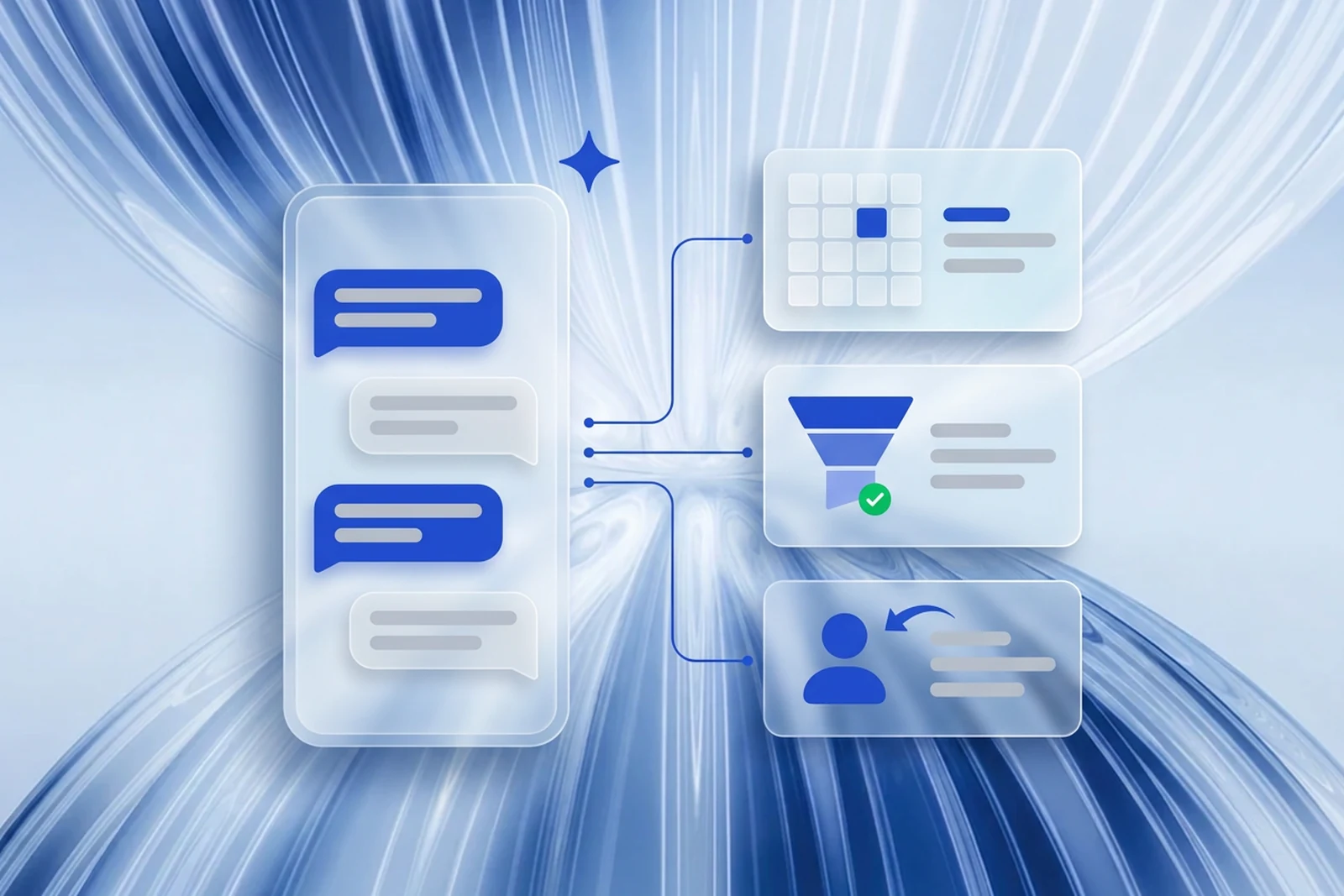
Business automation means defining "when X happens, automatically do Y", so repetitive tasks run without human touch. The purpose is not to replace people, but to free them from mechanical work in favour of work that requires human judgement.
The 12 processes worth stopping by hand
- Capturing leads into the system. Every enquiry — from a form, from WhatsApp, from an ad — enters the CRM automatically, with no typing.
- An immediate first response. An automatic "we have received your enquiry" message, even at two in the morning.
- Following up leads that did not close. An automatic reminder or message to a client who never came back.
- Appointment reminders. An automatic reminder that dramatically reduces no-shows.
- Issuing invoices and receipts. A connection between the sales system and the accounting software.
- Requesting a review. An automatic message after the service, asking for a Google review.
- Tagging and routing leads. Automatic assignment of a lead to the right representative by type or region.
- Status updates to the client. "Your order has shipped" / "the work is complete" — automatically.
- Collecting details before a call. A bot that gathers the basics so the representative arrives prepared.
- Weekly reports. A performance report that arrives by email automatically, without building it by hand.
- Calendar sync and scheduling. A booking link that syncs with the calendar without the back and forth.
- Abandoned cart recovery. In a store — an automatic reminder to anyone who did not complete the purchase.
The difference between doing it by hand and automating it
Here are the five highest-return processes, before automation and after:
| Process | By hand | After automation | Typical tool |
|---|---|---|---|
| Lead capture | Manual typing from every channel, leads falling through the cracks | Every enquiry enters the system automatically | CRM |
| First response | The client waits hours for an answer | An immediate acknowledgement, 24/7 | WhatsApp + CRM |
| Appointment reminders | Manual phone calls, a high no-show rate | An automatic reminder before the appointment | SMS / WhatsApp |
| Issuing invoices | Double entry between systems | The invoice is created automatically when the deal closes | Accounting software |
| Weekly reports | Built by hand every week | A performance report arrives by email automatically | GA4 / CRM |
As an illustration only: if following up each lead manually takes around 10 minutes, and a business receives around 100 leads a month, that is roughly 16 hours of work — before counting reminders, invoicing and reports. Automation returns most of that time, and at the same time prevents the leads that get forgotten and never answered. The exact saving depends on the business, but the direction is almost always the same: less mechanical work, more deals closed.
How to know what to automate first
The rule is simple: automate first what repeats and hurts most. Look for tasks meeting three conditions — they recur (daily or weekly), they are predictable (the same process every time), and they take time. That is where the return is fastest. It is also worth setting up basic measurement of your lead sources so you know which channel genuinely produces deals — and automate that one first.
What you need to get started
The heart of most automations is a good CRM that the other tools connect to, so the first step is choosing it correctly. Much of the value happens through WhatsApp — the channel where most customers in Israel already are — so connecting WhatsApp to the CRM is usually the second step. There is no need to automate everything in one day: start with one painful process, and expand.
Want to stop doing by hand what a machine could do? Take a look at Aiterra's development and automation service, or talk to us and we will map together what is worth automating first.