

Email Marketing in 2026: The Highest-ROI Channel
While everyone chases trends, your mailing list is the one marketing asset you own. How newsletters and automations become a quiet sales machine.


In short (TL;DR): Email marketing is direct marketing to a permission-based mailing list, and it remains one of the highest-return channels in digital marketing. The decisive advantage: the customer list is an asset you own outright — one that no external platform algorithm can take away from you.
Here is a fact that surprises most business owners: after all the trends, the networks and the shifting algorithms, email marketing remains one of the highest-return channels in digital marketing. The reason is simple — the mailing list is the only asset you own outright. Meta's algorithm can bury you tomorrow morning; nobody can take your customer list.
Why email, and why now?
When a visitor gives you their email address, they are giving you permission to speak to them directly — without paying for every impression and without competing against an algorithm. In an era when paid advertising costs only climb, a channel that lets you return to existing customers and interested prospects at almost no cost is an enormous commercial advantage. And an existing customer, as everyone knows, buys far more easily than a new one.
It is worth understanding the scale of the dependency on platforms: Google alone holds roughly 90% of the global search market (according to StatCounter), so a single algorithm update at Google or Meta can change overnight how much exposure you get. The mailing list, by contrast, is the one channel that does not depend on a third party.
Email marketing versus paid advertising: which actually pays?
The common mistake is to assume you have to choose between the two. In practice each channel plays a different role:
| Criterion | Email marketing | Paid advertising (Meta / Google Ads) |
|---|---|---|
| Ownership of the audience | Full — the list is yours | None — the audience belongs to the platform |
| Marginal cost of one more impression | Almost zero | Payment for every impression or click |
| Dependence on an algorithm | Low | Very high |
| Fit for existing customers | Excellent | Moderate |
| Effect of a change on the platform | Minimal | Critical |
The conclusion is not either/or: paid advertising is excellent at bringing in a new audience, and email turns that audience into repeat customers at low cost. It is the combination of the two that wins.
How do you build a newsletter people actually open?
The difference between a newsletter that gets deleted and one people wait for is real value: professional tips, customer stories, a look behind the scenes — and only then, gently, a commercial offer. Our rule of thumb: for every sales email, three emails that give something away. The subject line decides whether the email is opened at all, so it deserves the effort — short, curious and honest, without the overblown promises that lead straight to the spam button. That is how you build a list that opens, reads and clicks.
What are email automations, and why are they the quiet salesperson?
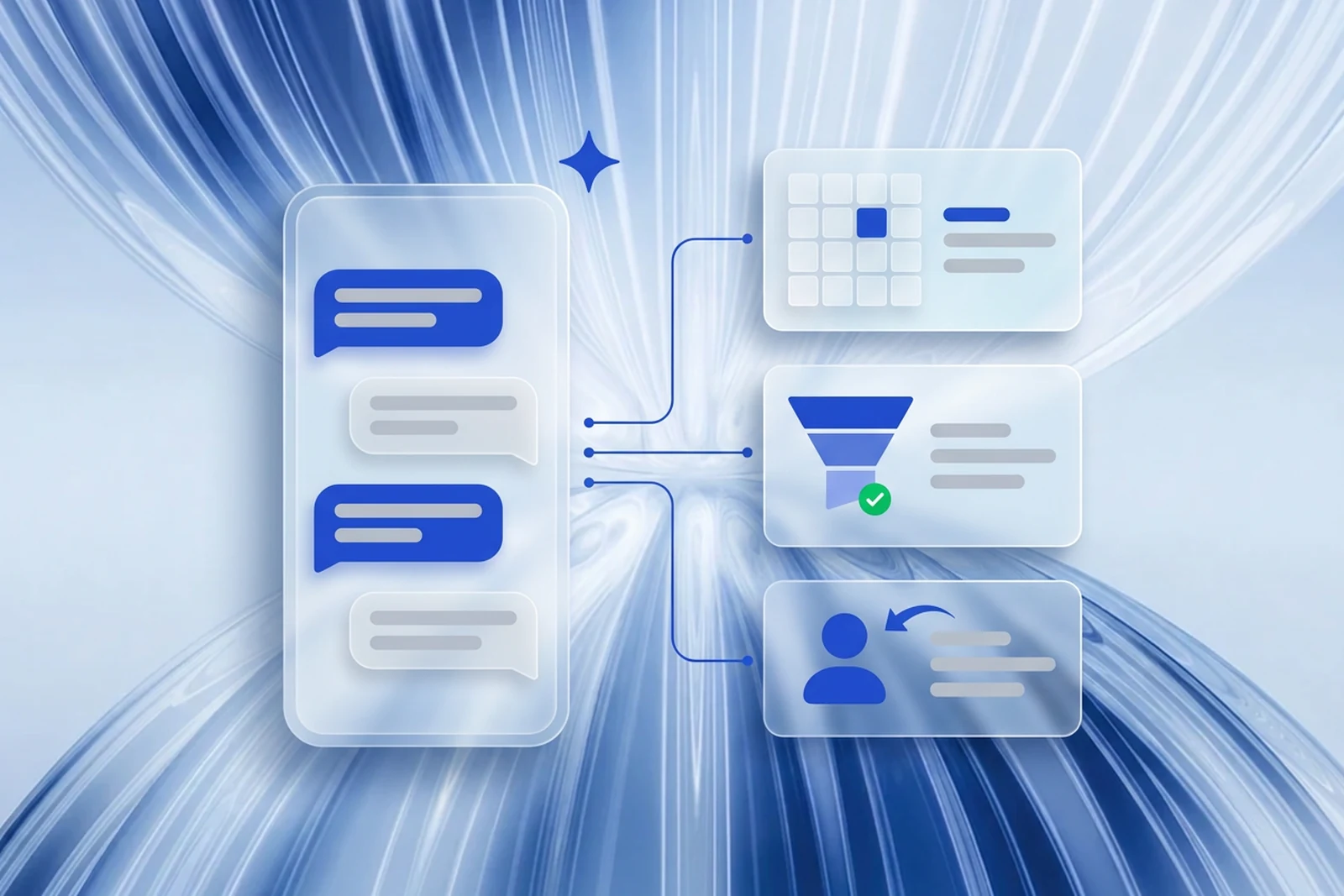
This is where email connects to the world of automation we live in. A sequence built once keeps working for years — warming cold leads, waking dormant customers and producing sales without anyone on the team touching a keyboard. These are the sequences we at Aiterra set up for almost every client:
- A welcome sequence: an automated series of emails for every new subscriber, introducing the business and building trust from the first moment.
- A follow-up email after a guide download: for anyone who took a lead magnet — an email that continues the conversation and moves them to the next stage.
- Abandoned basket recovery: an automatic reminder for anyone who started a purchase and did not finish — one of the most profitable sequences in online retail.
- A birthday greeting with an offer: a personal touch that produces a sale and strengthens loyalty over time.
The effectiveness of each sequence is best measured with an analytics tool such as GA4 (Google Analytics documentation) — so you can see which emails actually lead to opens, clicks and sales, and improve accordingly.
How do you start building the mailing list?
The right way starts with a lead magnet that is genuinely worth having — a guide, a calculator, a checklist or a joining discount — in exchange for signing up. Avoid buying lists (it is both unlawful and damaging to your sender reputation), and keep to Israeli anti-spam law: explicit opt-in and a clear unsubscribe option in every email. As the list grows, segment it into groups by interest or by stage in the funnel — that way every recipient gets relevant content, and open and conversion rates rise.
Want to turn your customer list into a revenue machine? Leave your details and we will build you a full email strategy — from the magnet through to the automation.
Want to save hours of work every week? Take a look at Aiterra's business automation service, or talk to us for a scoping call at no cost.